Hand Safety: Preventing Cuts, Fractures and Pinch-Point Injuries
Our hands are among the most important tools we use every day. Whether working with machinery, tools, materials, equipment or performing routine tasks, our hands are constantly exposed to hazards that can cause cuts, fractures, crushing injuries, burns and other serious injuries.
Many hand injuries happen in just a few seconds. A sharp edge, an unexpected movement, an unguarded pinch point or using the wrong type of glove can quickly result in an injury that affects a worker’s ability to perform everyday activities.
Protecting your hands starts before the task begins: identify the hazard, choose the right controls and keep your hands out of the line of fire.
Common Hand Hazards
Hand injuries can occur in many different workplace situations.
Some of the most common hazards include:
- Sharp edges, burrs, knives and broken glass.
- Pinch points between parts, doors, presses or equipment.
- Struck-by hazards from tools, suspended loads or falling materials.
- Splinters and rough surfaces.
- Hot surfaces and materials.
- Chemicals and hazardous substances.
- Exposed electrical components.
- Moving machinery and rotating equipment.
Before beginning any task, take a few moments to identify where your hands could be exposed and determine how the hazard will be controlled.
Cuts and Lacerations
Cuts and lacerations are among the most common hand injuries in many workplaces.
When working with knives, blades, sheet metal, glass or other sharp materials:
- Wear cut-resistant gloves appropriate for the material and task.
- Always cut away from your body and keep your free hand clear of the cutting path.
- Do not use damaged, improvised or unsuitable cutting tools.
- Keep the workpiece stable using clamps, guides or solid surfaces.
- Store knives and other sharp tools properly after use.
- Inspect tools before use and replace damaged blades when necessary.
Key rule: keep your hands out of the cutting line.
Fractures, Strikes and Pinch Points
Hands and fingers can easily become trapped between moving equipment, heavy materials or fixed objects.
To reduce the risk:
- Identify pinch points before moving or adjusting materials.
- Keep your hands away from areas where materials can shift, fall or close unexpectedly.
- Never place your hands underneath unsupported loads, plates or components.
- Use bars, hooks, handles or lifting equipment to guide heavy materials whenever possible.
- Lock out, secure or de-energize equipment before maintenance or intervention.
- Coordinate movements when multiple people are involved in a task.
If you cannot clearly see that your fingers and hands are in a safe position, stop the task and reposition yourself before continuing.
Use the Right Gloves for the Task
Gloves are an important part of hand protection, but not every glove protects against every hazard.
Select gloves according to the task:
- Cut-resistant gloves: for handling sheet metal, glass, knives and sharp edges.
- Impact-resistant gloves: for handling heavy materials or tasks where hands may be struck.
- Leather gloves: for moderate heat, friction and general heavy-duty work.
- Chemical-resistant gloves: when handling chemicals or hazardous substances. Always verify compatibility with the product being used.
- Properly sized gloves: gloves should fit correctly and allow safe control of tools and equipment.
Replace gloves that are torn, damaged, contaminated or excessively wet.
A glove only protects you when it is appropriate for the hazard and in good condition.
Safe Work Practices
Good hand protection involves more than wearing gloves.
Before and during the task:
- Inspect tools and equipment before use.
- Keep guards and protective devices in place.
- Maintain a clean and organized work area.
- Remove damaged tools from service.
- Use the correct tool for the job.
- Keep hands away from moving or rotating equipment.
- Use mechanical aids whenever they can reduce direct hand exposure.
- Avoid rushing or taking shortcuts.
Taking a few seconds to think about hand placement before acting can prevent a serious injury.
If an Injury Occurs
Even with proper precautions, workplace injuries can still occur.
If a hand injury happens:
- Stop the activity. Secure the area to prevent another incident.
- For cuts: apply direct pressure and cover the wound with clean material.
- For a possible fracture: immobilize the hand, avoid unnecessary movement and seek medical assistance.
- Report the injury immediately. Even minor injuries should be reported according to company procedures.
- Review the cause. Identify what contributed to the incident so corrective actions can prevent it from happening again.
Serious bleeding, crushing injuries, deep cuts, loss of sensation, severe pain or suspected fractures should receive appropriate medical attention as soon as possible.
Report Hazards and Near Misses
Hand safety also depends on identifying hazards before someone gets hurt.
Employees should report:
- Damaged tools or equipment.
- Missing or defective machine guards.
- Unsafe pinch points.
- Damaged protective gloves.
- Sharp or exposed surfaces.
- Near misses involving hands or fingers.
Reporting unsafe conditions gives the organization an opportunity to correct the hazard before an injury occurs.
Report it today so someone does not get hurt tomorrow.
StepsUP Hand Safety – Safety Moment
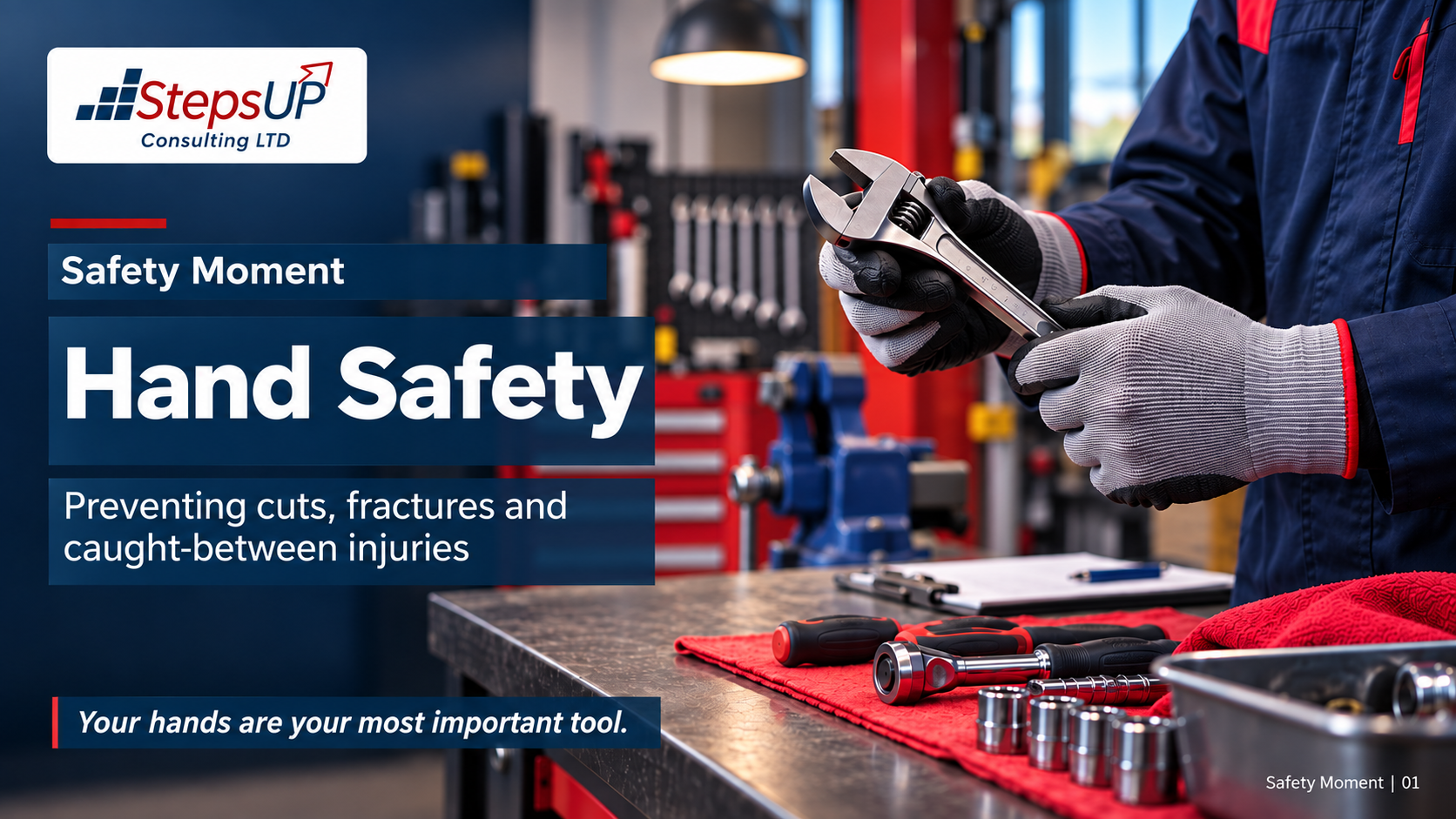
For a visual summary of the main recommendations for preventing cuts, fractures, pinch-point injuries and other hand hazards, review the StepsUP Hand Safety Moment:
StepsUP Safety Moment – Hand Safety
Review the complete presentation on hand safety, including common hazards, prevention of cuts and lacerations, fractures and pinch-point injuries, proper glove selection and what to do if an injury occurs.
This Safety Moment can be used during toolbox talks, safety meetings, employee orientations, pre-task discussions and workplace training sessions to reinforce safe hand positioning and hazard awareness.
Safe Hands. Stronger Work.
Your hands are essential to almost everything you do.
Take the time to identify hazards, use the correct tools and PPE, keep your hands away from danger zones and stop whenever the task cannot be performed safely.
Look. Think. Protect your hands before you act.
Every task. Every day. Every hand.