Mental Health at Work: Well-Being, Prevention, and Workplace Safety
Workplace safety is not limited to preventing accidents, using personal protective equipment, or following operational procedures. It also involves protecting employees’ psychological well-being and promoting working conditions that support good mental health.
Every day, employees face responsibilities, deadlines, organizational changes, and personal challenges that may influence their emotional well-being. When these pressures continue over time without adequate support or management, they can affect concentration, communication, decision-making, and job performance.
Promoting mental health at work means creating an environment where people feel respected, heard, valued, and supported.
Taking care of our mental health is also part of working safely.
Recognizing risk factors, identifying warning signs, and encouraging a supportive workplace culture can strengthen both individual well-being and collective safety.
Mental Health Is Also Workplace Safety
Psychological well-being directly influences how we think, feel, collaborate, and respond to situations throughout the workday.
When employees experience high levels of stress, exhaustion, or persistent concerns, certain abilities may be affected.
Some important areas include:
- Attention and concentration: prolonged stress and exhaustion can increase distractions and the likelihood of mistakes.
- Decision-making: feeling overwhelmed can make it more difficult to assess situations and identify appropriate solutions.
- Communication: emotional difficulties can affect workplace relationships and the ability to express concerns effectively.
- Teamwork: an environment based on trust and respect encourages collaboration and helps prevent incidents.
Mental health should be considered an essential part of occupational health and safety initiatives.
Talking about mental health is part of building a prevention-focused workplace culture.
Factors That Can Affect Our Well-Being
Different situations inside and outside the workplace can influence employees’ emotional well-being.
Identifying these factors allows organizations to develop preventive measures and improve working conditions.
Excessive Workload
Accumulated tasks, constant deadlines, long working hours, and insufficient recovery time can contribute to stress and exhaustion.
Distributing responsibilities realistically and establishing achievable priorities can help reduce these pressures.
Lack of Clarity
When responsibilities, priorities, or expectations are not clearly defined, employees may experience uncertainty and frustration.
Transparent communication helps create a more organized, predictable, and supportive work environment.
Conflict or Isolation
Lack of support, difficult workplace relationships, disrespectful behavior, and poor communication can negatively affect emotional well-being.
Promoting respect, inclusion, and collaboration helps strengthen relationships among coworkers.
Uncertainty and Personal Stress
Family, financial, and personal concerns may also influence concentration and performance during the workday.
Recognizing these situations with empathy allows organizations and coworkers to offer appropriate support without judgment.
Psychosocial risk factors can be identified, assessed, and managed through preventive actions.
Signs Worth Paying Attention To
Recognizing emotional, physical, or work-related changes can help identify when someone may need additional support.
These signs can appear in different ways and do not necessarily indicate the presence of a mental health disorder.
Common emotional warning signs may include:
- Persistent irritability or worry.
- Frequent feelings of being overwhelmed or anxious.
- Lack of motivation or discouragement.
- Frequent mood changes.
- Loss of interest in activities previously enjoyed.
Physical or work-related changes may include:
- Frequent fatigue or difficulty sleeping.
- Problems concentrating or making decisions.
- Headaches, muscle tension, or stomach discomfort.
- Withdrawal from coworkers or social interactions.
- Noticeable changes in work performance.
- Increased absenteeism or difficulty maintaining regular routines.
It is important to remember that an isolated warning sign does not constitute a diagnosis.
Observing with empathy, listening without judgment, and facilitating access to support are essential actions.
Five Self-Care Actions That Can Make a Difference
Self-care involves incorporating practices that support physical and emotional well-being.
Although these measures do not replace an organization’s responsibility to provide healthy and safe working conditions, they can help employees manage everyday challenges.
1. Take Short Breaks
Whenever possible, stand up, change activities, take a few deep breaths, or dedicate a few minutes to regaining your concentration.
Short breaks can help reduce accumulated tension throughout the workday.
2. Organize Your Priorities
Identify your most important tasks, establish realistic goals, and ask for clarification when responsibilities or expectations are not sufficiently defined.
Distinguishing between urgent and important tasks can help improve organization and reduce unnecessary pressure.
3. Take Care of Your Habits
Getting adequate sleep, maintaining balanced nutrition, and engaging in regular physical activity contribute to overall well-being.
Healthy habits help support recovery and improve our ability to manage daily demands.
4. Set Healthy Boundaries
Recognize when you need support, when responsibilities exceed available resources, and when it is necessary to discuss a more balanced distribution of tasks.
Healthy boundaries support sustainable performance and personal well-being.
5. Stay Connected
Talk to people you trust and maintain positive relationships with coworkers, family members, and friends.
Social connections can provide emotional support and help reduce feelings of isolation.
Small daily actions can contribute to better well-being and strengthen our ability to face workplace challenges.
How to Support a Coworker
Support among coworkers is an important part of a healthy workplace environment.
You do not need to have all the answers to help someone. Sometimes, listening and showing genuine concern can make a meaningful difference.
Three important actions are:
- Listen without judgment: ask how the person is feeling, pay attention, and avoid minimizing their concerns.
- Respect their privacy: do not share personal information without permission, and avoid making assumptions or diagnoses.
- Make support easier: encourage the person to use available support channels or seek professional guidance when needed.
It is also important to avoid comments that may make someone feel guilty or embarrassed about experiencing emotional difficulties.
A workplace built on trust makes it easier for employees to express concerns and seek assistance.
We do not have to solve everything. Listening, supporting, and guiding others can also make a difference.
Responsibilities of Leaders and Teams
Protecting mental health is a shared responsibility involving employees, supervisors, Human Resources, and organizational leadership.
A healthy workplace requires meaningful actions, transparent communication, and ongoing commitment.
Responsibilities of Leaders and Supervisors
- Distribute workloads realistically and fairly.
- Clearly communicate objectives, deadlines, and responsibilities.
- Listen to employees’ concerns and provide appropriate support.
- Identify and manage workplace psychosocial risk factors.
- Promote an environment of respect, trust, and collaboration.
- Take appropriate action when harassment, discrimination, or workplace conflicts occur.
Responsibilities of Employees
- Treat coworkers with respect and consideration.
- Avoid harassment, discrimination, and exclusionary behavior.
- Communicate concerns through available reporting channels.
- Collaborate to maintain healthy workplace relationships.
- Seek guidance when facing difficult situations.
- Participate in workplace well-being and prevention initiatives.
Responsibilities of Human Resources and the Organization
- Promote policies supporting psychological well-being and psychosocial risk prevention.
- Communicate available resources and support channels.
- Encourage mental health awareness and leadership training.
- Establish appropriate procedures for reporting workplace concerns.
- Promote privacy and confidentiality.
- Evaluate workplace conditions that may negatively affect employees’ well-being.
- Encourage open communication and a respectful organizational culture.
A healthy workplace culture is built through daily actions, not just words.
What to Do If You Need Help
Recognizing when you need support is an important step toward protecting your health and well-being.
You do not have to wait until a situation becomes severe before seeking guidance.
If you are experiencing persistent emotional difficulties, consider the following steps:
1. Recognize What Is Happening
Pay attention to your emotions, thoughts, and behaviors.
Do not ignore persistent symptoms or changes that interfere with your daily activities.
2. Talk to Someone You Trust
You may reach out to a trusted person, your supervisor, Human Resources, or someone who can listen and provide guidance.
Sharing what you are experiencing may help you access appropriate support.
3. Seek Professional Guidance
A mental health professional can assess your situation and recommend appropriate strategies or treatment based on your needs.
If there is an immediate danger to you or someone else, seek assistance from local emergency services.
Asking for help is a responsible way to protect your well-being.
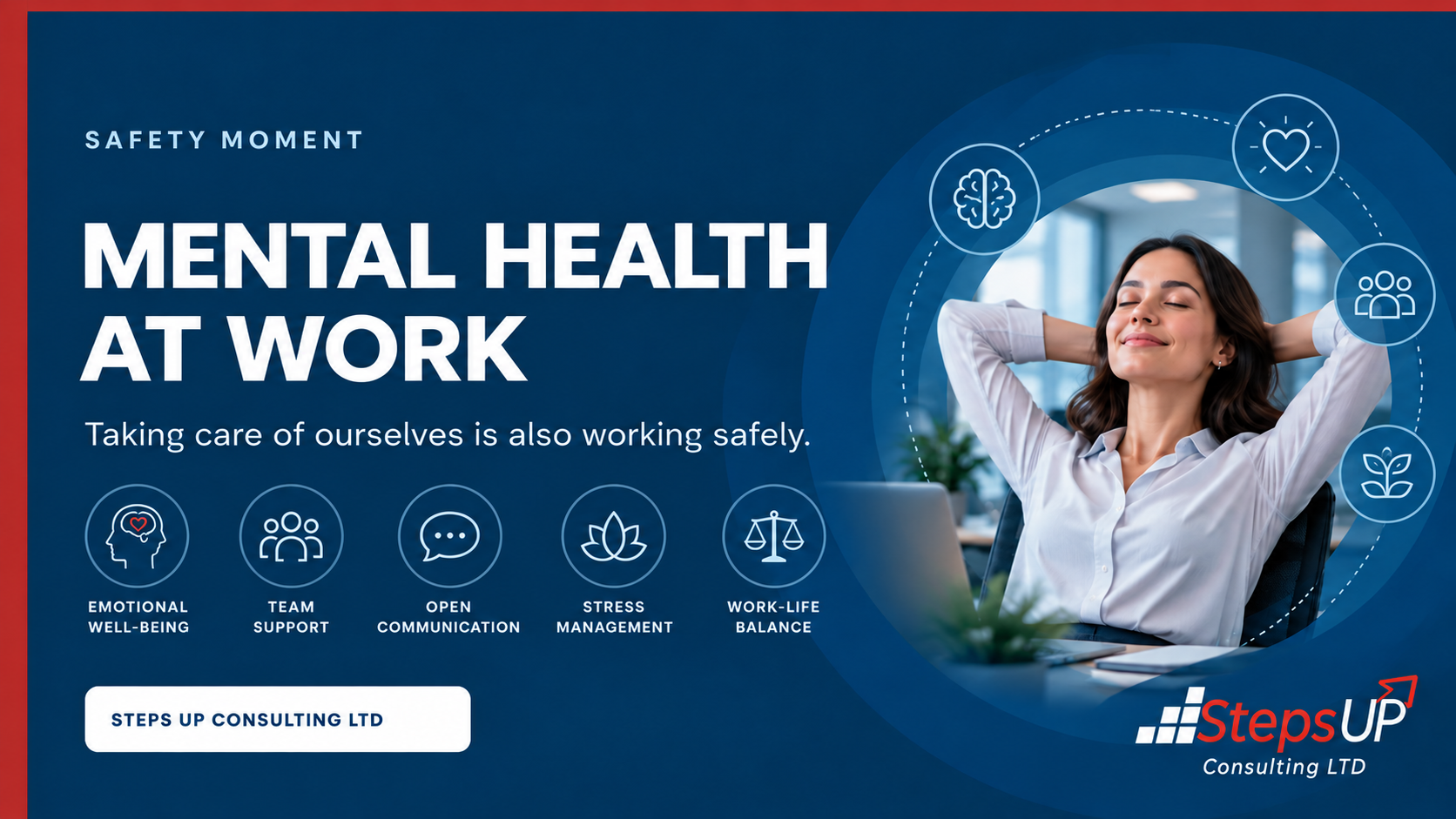
StepsUP – Safety Moment: Mental Health at Work
At StepsUP Consulting LTD, we recognize that psychological well-being is an essential component of a strong workplace safety culture.
As part of our commitment to prevention and awareness, we are sharing our Safety Moment presentation on Mental Health at Work.
This presentation explores the main factors that may affect emotional well-being, warning signs worth paying attention to, practical self-care actions, ways to support coworkers, and the shared responsibilities of leaders and teams.
StepsUP – Safety Moment: Mental Health at Work
Explore our complete presentation covering emotional well-being, psychosocial risks, warning signs, self-care practices, coworker support, and the responsibilities of leaders and teams in building healthier and safer workplaces.
This material can be shared during team meetings, safety talks, Human Resources activities, employee training sessions, and organizational well-being programs.
Encouraging open conversations about mental health can help reduce stigma, promote early support, and strengthen prevention efforts.
A Moment to Reflect as a Team: Small Actions, Big Changes
Creating a healthy workplace does not depend exclusively on large initiatives or formal organizational programs.
Everyday actions can also generate meaningful improvements in the way we work and interact with one another.
As a team, we can reflect on the following question:
What small action can we take today to make our workplace healthier?
Some practical actions include:
- Taking a short break when needed.
- Listening to a coworker who needs someone to talk to.
- Clearly communicating workplace expectations.
- Respecting other people’s boundaries and needs.
- Seeking support when responsibilities become difficult to manage.
- Encouraging a more balanced distribution of tasks.
- Recognizing and appreciating the contributions of others.
These actions can become personal and collective commitments that contribute to stronger workplace well-being.
Well-Being and Prevention: A Shared Commitment
Mental health and workplace safety are closely connected.
An environment where people feel supported, heard, and respected encourages collaboration, early identification of concerns, and incident prevention.
Protecting mental health requires both individual actions and organizational commitment to maintaining safe and healthy working conditions.
Listen. Prevent. Support.
These three actions provide an important foundation for strengthening our culture of well-being and safety.
At StepsUP Consulting LTD, we believe that protecting people also means recognizing their emotional needs, promoting respectful relationships, and facilitating access to support when necessary.
Caring for mental health is caring for everyone’s safety.
Safe People. Stronger Places.