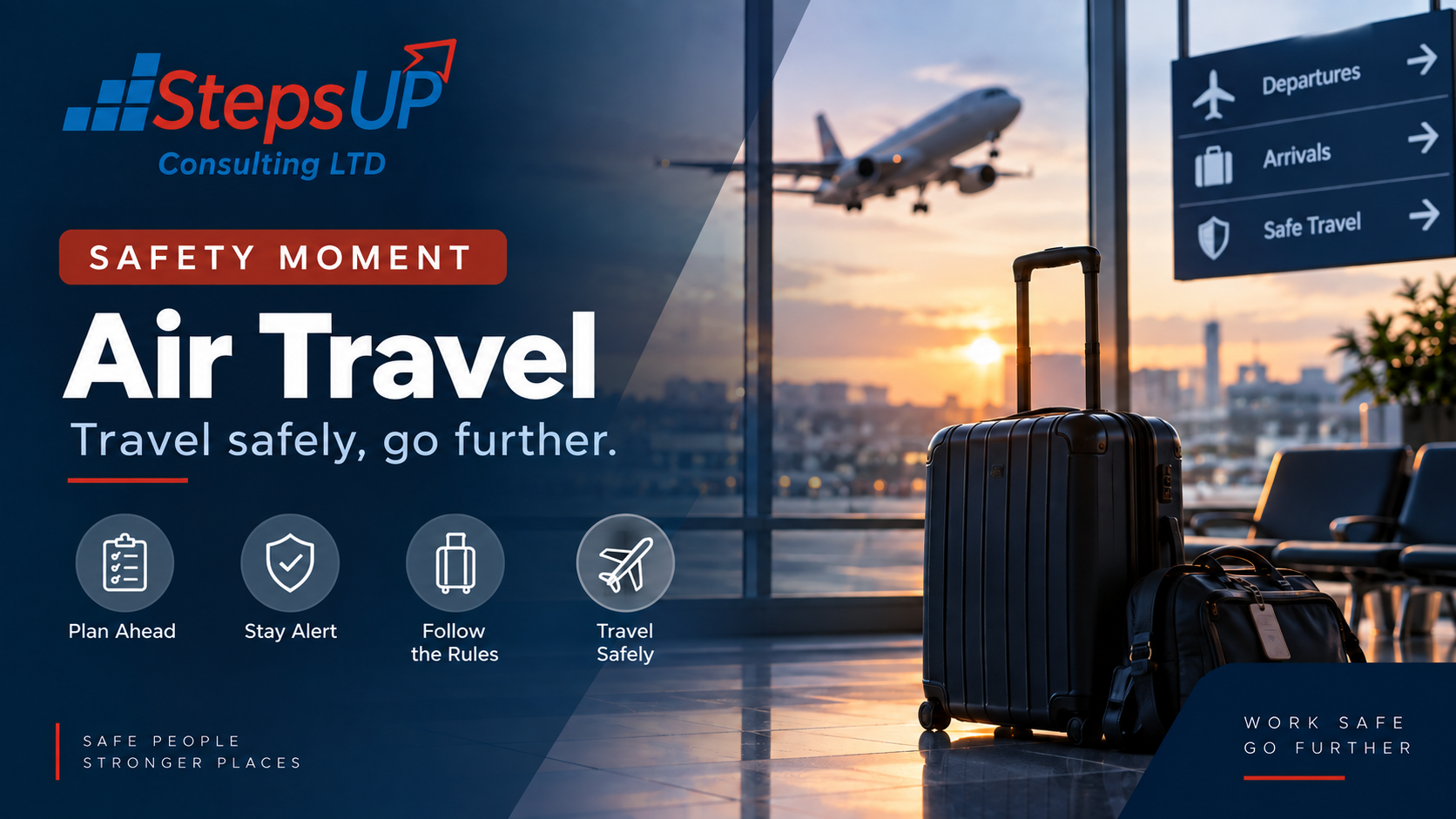
Air Travel Safety: Plan Ahead, Stay Alert and Travel Safely
Air travel is an important part of modern business, connecting people, teams and opportunities across different locations. Although flying is a routine activity for many travelers, every journey involves decisions that can influence personal safety, comfort and efficiency.
A safe trip begins long before boarding the aircraft. Proper planning, attention to surroundings, responsible baggage handling and following established instructions can help prevent delays, reduce unnecessary risks and create a better travel experience.
Preparation, awareness and responsible decisions are essential throughout every stage of the journey.
Whether traveling for business, training, meetings or personal reasons, staying alert and prepared helps ensure that we arrive safely and ready for what comes next.
Before the Trip: Preparation Matters
Good travel safety begins with planning.
Before leaving for the airport, take time to review the essential details of your trip and make sure everything you need is ready.
Recommended practices include:
- Review your itinerary: confirm your flight schedule, terminal, transportation arrangements and important travel details.
- Bring your documents: keep your identification, boarding pass and required travel documents organized and accessible.
- Prepare your baggage: confirm baggage limits, restricted items and identification tags before leaving home.
- Have a communication plan: keep emergency contact information available and make sure your phone, battery and chargers are ready.
Taking a few minutes to prepare can help prevent unnecessary stress, missed flights and last-minute decisions.
Responsible preparation creates a safer journey.
At the Airport: Stay Alert and Organized
Airports are busy environments where travelers, baggage, vehicles, security processes and changing schedules all come together.
Maintaining awareness is especially important during check-in, security screening and boarding.
Good practices include:
- Arrive early: allow enough time for check-in, security screening and reaching your boarding gate.
- Keep documents handy: have your identification and boarding pass available when required.
- Follow security instructions: respect restrictions and organize your belongings before entering screening areas.
- Watch your baggage: never leave bags unattended and avoid accepting items from people you do not know.
- Check airport screens: confirm your gate, boarding time and any schedule changes.
- Wait safely: remain in authorized areas and pay attention to announcements.
Avoid rushing whenever possible. Moving quickly through a crowded airport can increase the likelihood of forgetting documents, losing belongings or missing important information.
Attention, order and prevention are important at every stage.
Safe Baggage: Protect Your Belongings
Your baggage should be prepared not only for convenience, but also for security.
Before checking or carrying a suitcase, make sure it can be easily identified and that important items are properly protected.
Consider the following:
- Identify your suitcase: add your name, phone number or another visible identification method.
- Check the weight: confirm airline baggage limits to reduce delays or additional charges.
- Protect valuables: keep important documents, money and electronics with you whenever appropriate.
- Avoid restricted items: verify what may or may not be transported in carry-on and checked baggage.
- Secure the contents: close zippers properly, organize liquids and use a lock when appropriate.
- Check baggage at pickup: verify the identification tag and condition of the suitcase before leaving the baggage claim area.
Properly identifying and securing baggage helps reduce confusion, loss and unnecessary travel disruptions.
Order and identification are simple actions that can make a significant difference.
During the Flight: Safe and Responsible Behavior
Safety continues after boarding the aircraft.
Passengers play an important role by following crew instructions, remaining aware of their surroundings and behaving responsibly throughout the flight.
Important practices include:
- Wear your seat belt: keep it fastened while seated and follow the seat belt signs.
- Follow instructions: listen carefully to the flight crew and respect all safety directions.
- Store your belongings: keep baggage and personal items clear of aisles and emergency exits.
- Move carefully: stand or walk only when conditions are safe, especially during turbulence.
- Take care of your well-being: stay hydrated, rest and communicate any significant discomfort when necessary.
- Show respect on board: maintain appropriate behavior and be considerate of other passengers and crew members.
Even experienced travelers should continue paying attention to safety instructions.
Conditions can change during a flight, and following the guidance of the crew remains essential.
Calm, prevention and respect contribute to a safer cabin.
Health and Well-Being During Travel
Travel can affect the body through changes in routine, long periods of sitting, fatigue and reduced hydration.
Taking care of your health helps you remain comfortable and alert throughout the journey.
Good practices include:
- Stay hydrated: drink water before, during and after the flight.
- Get enough rest: proper sleep can help reduce fatigue and stress.
- Eat light meals: choose foods that help you remain comfortable during travel.
- Bring your medications: keep necessary medicines and prescriptions accessible when traveling.
- Maintain personal hygiene: wash your hands and use sanitizer when appropriate.
- Move regularly: during longer trips, stretch your legs and change position when it is safe to do so.
Small actions such as drinking water, resting properly and moving periodically can make the journey more comfortable and help travelers arrive in better condition.
Well-being, prevention and energy should remain part of every trip.
Safe Arrival: The Journey Is Not Over Yet
Safety does not end when the aircraft lands.
Remain attentive while leaving the aircraft, collecting baggage and arranging transportation to your final destination.
Check that you have all personal belongings before leaving the aircraft or baggage claim area. Confirm your luggage identification and condition, and use reliable transportation options for the next stage of your journey.
Avoid making rushed decisions simply because the flight has ended.
A safe journey includes every step from departure to final arrival.
StepsUP – Safety Moment: Air Travel
For a visual summary of safe travel practices before, during and after a flight, review the complete StepsUP Safety Moment on Air Travel:
StepsUP Safety Moment – Air Travel
Review the complete presentation covering travel preparation, airport awareness, baggage safety, responsible behavior during the flight, health and well-being, and practical recommendations for a safer journey.
This Safety Moment can be used during team meetings, orientations, business travel preparation, training sessions or pre-travel discussions to reinforce practical behaviors that help employees travel safely and responsibly.
Safer Travel, Better Opportunities
Travel connects people, projects and opportunities, but safety should remain part of every decision we make along the way.
Plan ahead. Keep your documents organized. Pay attention to your surroundings. Protect your baggage. Follow airport and crew instructions. Take care of your health and remain alert until you reach your final destination.
Safe travel begins with preparation and continues with responsible choices.
Every journey is an opportunity to demonstrate a strong safety culture.
Plan ahead. Stay informed. Take care of yourself and others. Travel safely.
Safe People. Stronger Places.