“`html
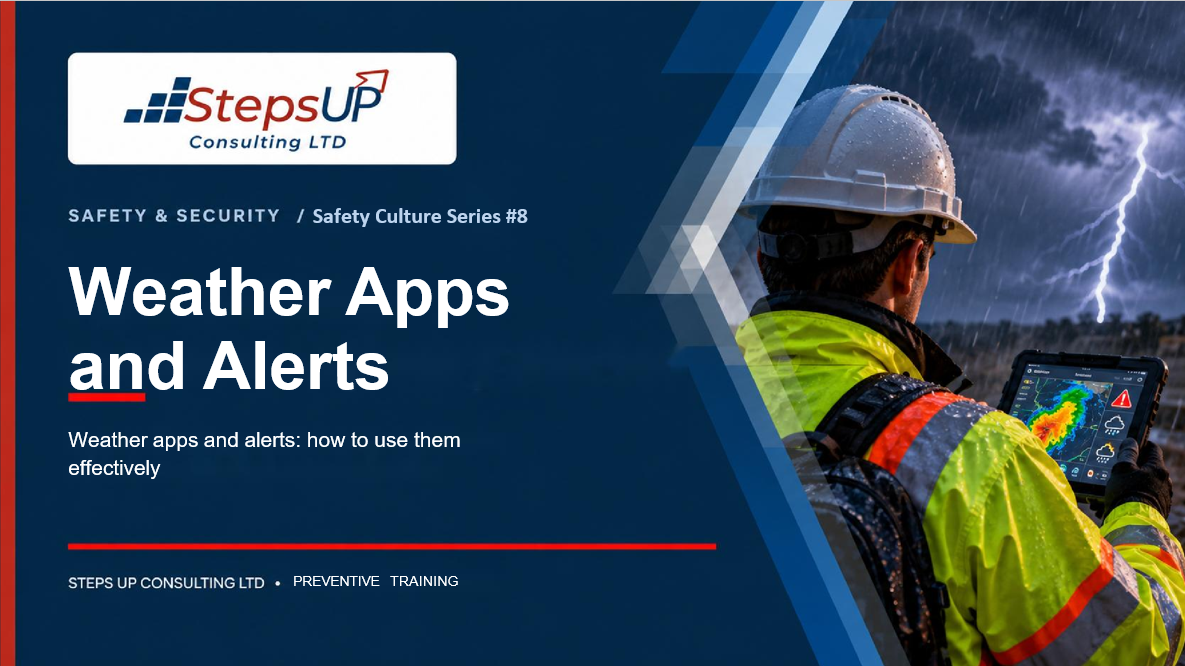
Weather Apps and Alerts: How to Use Them Effectively
Weather conditions can change unexpectedly, creating serious risks for employees working outdoors, traveling between locations, or performing field activities.
Thunderstorms, heavy rainfall, strong winds, extreme heat, and flash flooding can affect visibility, accessibility, equipment operation, and personal safety.
Using reliable weather applications and understanding official alerts allows employees and organizations to anticipate hazardous conditions, adjust work schedules, and make safer decisions.
Weather awareness is an essential part of workplace safety and prevention.
Why Weather Monitoring Matters
Checking weather conditions before and during work activities helps reduce unnecessary exposure to environmental hazards.
Weather applications provide useful information, but their effectiveness depends on interpreting forecasts correctly and responding appropriately.
Key benefits include:
- Early preparation: Identify potential weather hazards before beginning outdoor activities.
- Improved planning: Adjust routes, schedules, and work assignments according to expected conditions.
- Better decision-making: Determine when activities should be postponed, suspended, or relocated.
- Emergency readiness: Identify safe shelter locations and establish communication procedures before severe weather develops.
Checking the forecast is not just about knowing the weather. It is about protecting people.
Understanding Weather Alerts and Potential Hazards
Employees should pay attention to different meteorological conditions that may create workplace risks.
Thunderstorms and Lightning
Lightning can pose a serious danger during outdoor activities, particularly in exposed areas and open fields.
If thunder is heard, employees should stop exposed activities and seek shelter in a substantial enclosed building or an appropriate enclosed vehicle.
Heavy Rainfall and Flash Flooding
Intense rainfall can cause reduced visibility, slippery surfaces, difficult access routes, and rapidly developing flooding.
Workers should avoid flooded roads or areas and follow official guidance.
Strong Winds
Strong winds can affect equipment stability, increase the risk of falling objects, and create dangerous conditions around machinery or temporary structures.
Extreme Heat and UV Exposure
High temperatures and intense sunlight can contribute to dehydration, heat-related illness, fatigue, and reduced concentration.
Employees should follow appropriate heat prevention measures and monitor changing environmental conditions.
Recognizing weather hazards early helps prevent incidents before they happen.
Three Essential Practices for Using Weather Applications
1. Use Reliable Information Sources
Prioritize official meteorological services and authorized weather alerts.
Compare forecasts with recent updates and actual local conditions rather than relying exclusively on a single application.
2. Identify the Most Important Weather Variables
Monitor thunderstorms, rainfall intensity, flash flood risks, wind conditions, temperatures, and UV levels.
Different work activities require attention to different environmental hazards.
3. Interpret Alerts Correctly
Before taking action, verify:
- The exact geographical area affected.
- The expected time and duration of the event.
- The probability and severity of the forecast conditions.
- Whether the alert remains active or has been updated.
A weather alert is only useful when it leads to timely preventive action.
Weather Safety: Before, During, and After Work
Before Starting Work
Check the forecast and official alerts for the exact work location and planned travel route.
Review emergency procedures, communication methods, evacuation routes, and available shelter locations.
During the Workday
Keep weather notifications enabled and monitor changing conditions.
Communicate significant changes to coworkers and supervisors.
Do not depend solely on a weather application; remain aware of actual conditions and follow established safety procedures.
When Severe Weather Is Reported
Suspend exposed activities when conditions become unsafe.
Move to appropriate shelter and follow the organization’s emergency response procedures.
Resume activities only when conditions are considered safe under the applicable protocol.
Safe operations require continuous monitoring, communication, and preparedness.
Practical Example: Thunderstorm Alert Near a Worksite
Imagine that a field team receives a notification indicating that a thunderstorm is approaching its work location.
What should the team do?
- Step 1: Review an official weather source to confirm the alert and affected area.
- Step 2: Stop exposed activities and move to appropriate shelter.
- Step 3: Resume work only after conditions are safe and organizational procedures allow it.
Important: If you hear thunder, seek shelter in an enclosed building or an appropriate vehicle.
Final Weather Safety Checklist
Before starting or continuing field activities, confirm the following:
- The weather forecast covers the correct work location.
- Weather notifications are enabled and up to date.
- Potential shelter locations and evacuation procedures are identified.
- A reliable communication channel has been established.
- Employees understand when to stop work and report unsafe conditions.
Stopping, communicating, and correcting an unsafe condition is a professional decision.
StepsUP – Safety Moment #8: Weather Apps and Alerts
At StepsUP Consulting LTD, we believe that prevention begins with awareness, preparation, and informed decision-making.
As part of our Safety & Security initiative and Safety Culture Series, we are sharing Safety Moment #8: Weather Apps and Alerts – How to Use Them Effectively.
This presentation covers weather-related hazards, reliable information sources, effective use of alerts, preventive practices, and practical workplace safety scenarios.
StepsUP – Safety Culture Series #8: Weather Apps and Alerts
Explore our complete safety presentation and learn how to interpret weather alerts, recognize environmental hazards, plan safer field activities, and respond effectively to changing conditions.
This resource can be shared during safety meetings, toolbox talks, fieldwork briefings, employee training sessions, and operational planning activities.
Building a Stronger Safety Culture Through Preparedness
Weather conditions may be beyond our control, but our preparation and response can make a meaningful difference.
By monitoring reliable information, communicating hazards, respecting official alerts, and following established procedures, teams can reduce unnecessary exposure and strengthen workplace safety.
Stay informed. Plan ahead. Act safely.
At StepsUP Consulting LTD, we encourage every employee to make weather awareness part of their daily safety routine.
Safe People. Stronger Places.
“`