Fall Flu Season: Prevention, Awareness and Workplace Safety
As temperatures begin to drop and people spend more time indoors, seasonal influenza (flu) becomes an important health and safety concern for workplaces, families and communities.
The flu is a contagious respiratory illness caused by influenza viruses. It can affect anyone, ranging from mild symptoms to more serious complications, particularly among individuals at higher risk.
In workplaces, close interactions, shared spaces and daily activities can create opportunities for the virus to spread.
Preventing seasonal influenza requires awareness, good hygiene, responsible decisions and cooperation between employees and employers.
Protecting ourselves from the flu is not only a personal health decision. It is also part of our shared commitment to workplace safety.
Understanding how influenza spreads, recognizing its symptoms and applying preventive measures can help reduce transmission and support a healthier, safer and more productive working environment.
Understanding Seasonal Influenza
Seasonal influenza is a respiratory infection caused primarily by influenza A and B viruses.
The flu typically circulates more actively during the fall and winter months in many Northern Hemisphere countries, although the timing and intensity of influenza activity can vary by region.
Unlike the common cold, influenza symptoms often develop suddenly and can cause significant discomfort, fatigue and disruption to normal activities.
Important facts about seasonal influenza include:
- It is contagious: influenza viruses spread mainly through respiratory particles released when infected individuals breathe, talk, cough or sneeze.
- Anyone can become infected: people of all ages can contract influenza, even if they are generally healthy.
- Symptoms vary: some individuals experience mild illness, while others may develop more serious complications.
- Higher-risk groups: older adults, young children, pregnant individuals and people with certain underlying medical conditions face an increased risk of severe illness.
- Seasonal patterns: influenza activity commonly increases during colder months in temperate Northern Hemisphere regions.
Understanding these characteristics helps employees recognize why influenza prevention should be part of everyday workplace health and safety practices.
Awareness is the first step toward effective prevention.
Recognizing Common Flu Symptoms
Recognizing influenza symptoms early helps individuals take appropriate action and avoid exposing coworkers to illness.
Flu symptoms often appear suddenly and may range from mild to severe.
Common symptoms include:
- Fever or chills: an elevated body temperature or unusual feelings of cold, although not everyone with influenza develops a fever.
- Cough: a dry or persistent cough is a common symptom of influenza.
- Sore throat: irritation or discomfort in the throat may occur during infection.
- Muscle and body aches: influenza frequently causes general body discomfort and muscle pain.
- Fatigue: unusual tiredness and weakness can make normal daily activities more difficult.
- Headache: many individuals experience headaches along with other respiratory symptoms.
- Runny or stuffy nose: nasal congestion can also occur.
Symptoms may resemble other respiratory infections, including COVID-19, so symptoms alone may not identify the exact illness.
If symptoms become severe, worsen or persist, seek medical advice.
Difficulty breathing, persistent chest pain, new confusion or other emergency warning signs require immediate medical attention.
Recognizing symptoms early supports timely care and helps protect the people around us.
How Flu Spreads in the Workplace
Workplaces bring people together through meetings, shared equipment, common areas and daily interactions.
These activities can increase opportunities for influenza transmission, particularly in indoor environments with inadequate ventilation.
Common situations that can contribute to transmission include:
- Respiratory particles: influenza can spread when an infected person coughs, sneezes, talks or breathes near others.
- Close contact: working near infected coworkers during meetings, conversations or shared tasks can increase exposure.
- Shared indoor spaces: crowded areas with insufficient ventilation can allow infectious respiratory particles to accumulate.
- Contaminated surfaces: although less common than respiratory transmission, infection may occur when someone touches a contaminated surface and then touches their eyes, nose or mouth.
- Working while sick: employees who continue attending the workplace with influenza symptoms may expose others.
Offices, meeting rooms, break areas, shared workstations and other enclosed spaces require particular attention to hygiene and ventilation.
Reducing transmission involves a combination of personal responsibility and organizational preventive measures.
A safer workplace begins with recognizing how everyday interactions can affect the health of others.
Prevention Measures: Simple Actions Make a Difference
Preventing influenza does not depend on one action alone.
A combination of vaccination, hygiene, respiratory etiquette, adequate ventilation and responsible decisions helps reduce the likelihood of transmission.
Recommended preventive practices include:
- Get vaccinated: annual influenza vaccination is one of the most effective ways to reduce the risk of influenza illness and serious complications.
- Wash your hands: clean your hands regularly with soap and water, or use an alcohol-based hand sanitizer when appropriate.
- Cover coughs and sneezes: use a tissue or your elbow to cover your mouth and nose, then dispose of tissues properly.
- Keep shared surfaces clean: regularly clean frequently touched areas such as desks, keyboards, handles and shared equipment.
- Improve ventilation: increase the supply of clean air in indoor workspaces where possible.
- Avoid close contact when sick: reduce unnecessary interactions with others when experiencing flu-like symptoms.
- Consider additional protection: a well-fitting mask can provide an additional layer of protection, particularly in crowded indoor environments or when respiratory viruses are circulating widely.
These practices are especially important during periods of increased influenza activity.
Employees and organizations should follow applicable public health guidance and workplace health and safety policies.
Small preventive habits, practiced consistently, can make a meaningful difference.
What to Do When You Feel Sick
Feeling sick during the workweek can create uncertainty about whether to attend work, continue normal activities or seek medical care.
However, protecting coworkers and allowing sufficient time for recovery should remain priorities.
If you develop flu-like symptoms, consider the following actions:
- Stay home when sick: avoid attending work when you are experiencing symptoms of a respiratory infection and are not well enough to participate safely.
- Notify your supervisor: follow your organization’s procedures for reporting illness or requesting time away from work.
- Seek medical advice: contact a healthcare professional if symptoms are severe, worsening or if you are at increased risk of complications.
- Rest and hydrate: allow your body time to recover and maintain adequate fluid intake.
- Follow return-to-work guidance: resume normal activities when symptoms have been improving overall for at least 24 hours and any fever has resolved for at least 24 hours without fever-reducing medication, subject to applicable workplace and public health requirements.
- Take additional precautions: for the next five days after resuming normal activities, consider measures such as improved ventilation, good hygiene, masking and limiting close contact, particularly around higher-risk individuals.
Certain employees, including healthcare workers, may be subject to additional occupational health requirements.
Employees should always follow the applicable policies and recommendations established for their workplace.
Taking time to recover is a responsible decision that supports both personal health and workplace safety.
Workplace Safety Responsibilities
Influenza prevention is a shared responsibility.
Maintaining a healthy workplace requires participation from employees, supervisors, management and the teams responsible for facilities and workplace services.
Each group contributes to reducing exposure and supporting a positive safety culture.
Employees:
- Practice good personal hygiene and respiratory etiquette.
- Stay home when sick and follow reporting procedures.
- Follow workplace health and safety recommendations.
- Be considerate of coworkers who may be more vulnerable to illness.
Supervisors:
- Encourage employees to follow preventive measures.
- Support employees who need time away from work due to illness.
- Communicate expectations clearly and respectfully.
- Promote an environment where employees can report illness without unnecessary pressure.
Human Resources and Management:
- Communicate workplace health and safety policies.
- Support influenza awareness and wellness initiatives.
- Review sick leave and return-to-work procedures.
- Coordinate preventive measures when respiratory illness risks increase.
Cleaning and Facilities Teams:
- Maintain regular cleaning of common areas.
- Pay attention to frequently touched surfaces.
- Support adequate ventilation and indoor air quality.
- Maintain access to appropriate hygiene supplies.
Team Culture:
A healthy workplace also depends on respect, communication and consideration for others.
Employees should support coworkers, avoid unnecessary exposure and understand that health and safety decisions can affect the entire team.
Everyone plays a role in creating a safer, healthier and more supportive workplace.
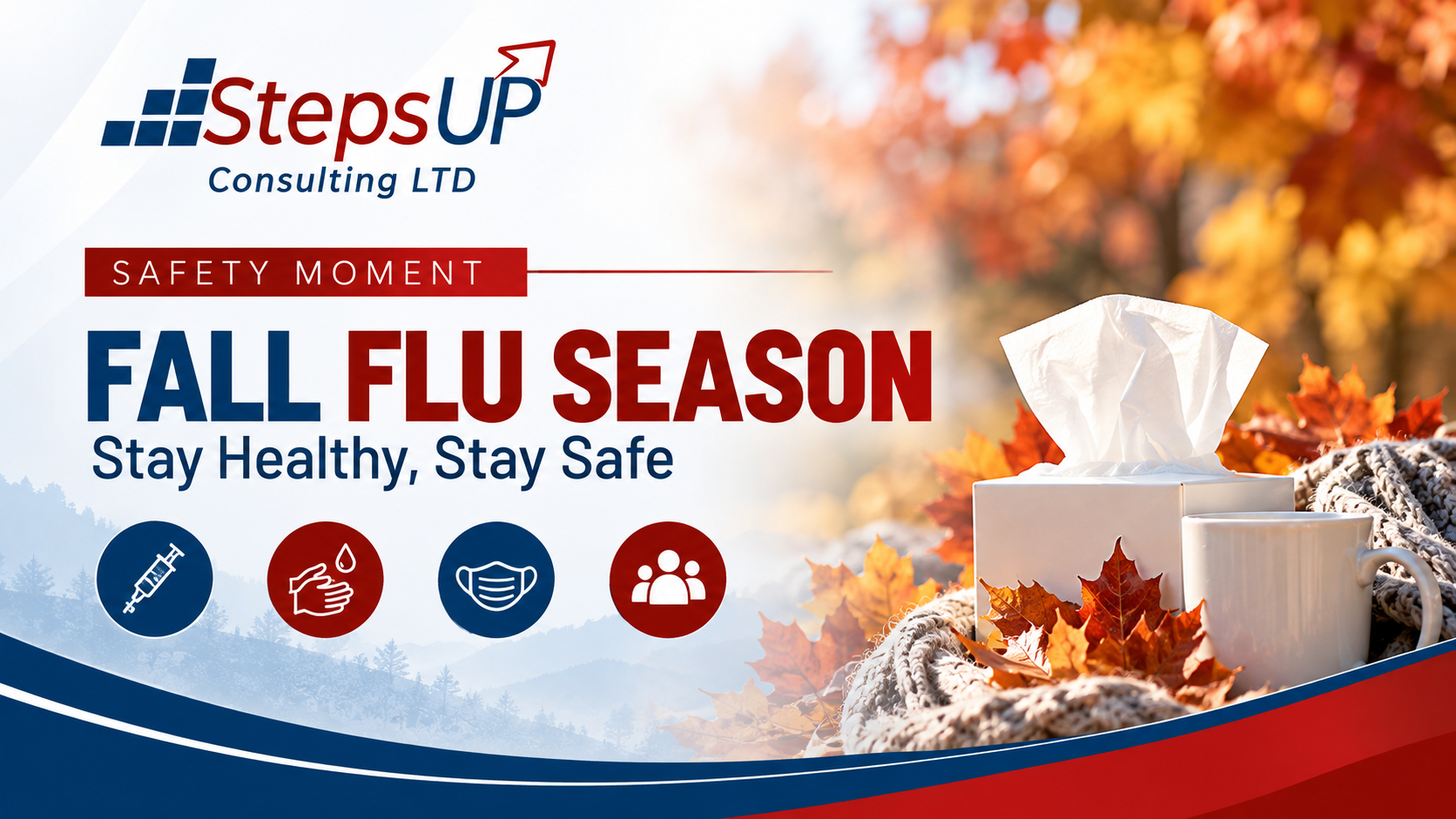
StepsUP – Safety Moment: Fall Flu Season
For a visual summary of influenza prevention, common symptoms, workplace transmission and shared safety responsibilities, review the complete StepsUP Safety Moment on Fall Flu Season:
StepsUP Safety Moment – Fall Flu Season
Explore the complete presentation covering seasonal influenza, early symptom recognition, how the flu spreads in the workplace, practical prevention measures, actions to take when feeling sick, and the shared responsibilities that help keep our teams healthy and safe.
This Safety Moment can be shared during team meetings, employee orientations, toolbox talks, workplace safety discussions and seasonal health awareness activities.
By discussing influenza prevention before and during flu season, organizations can encourage responsible behavior and reinforce their commitment to employee well-being.
Prevention and Commitment: A Shared Responsibility
Seasonal influenza is a reminder that workplace safety includes more than physical hazards, equipment and operational procedures.
Protecting employee health is also an essential part of maintaining safe and productive operations.
Get vaccinated. Practice good hygiene. Recognize symptoms early. Stay home when sick. Maintain clean and well-ventilated spaces. Support coworkers and follow workplace health and safety guidelines.
A healthy workplace starts with each of us.
Every preventive action contributes to reducing risks and supporting the well-being of our teams.
By remaining informed, acting responsibly and looking out for one another, we can strengthen our workplace safety culture throughout flu season.
Stay healthy. Stay aware. Protect yourself and others.
Safe People. Stronger Places.