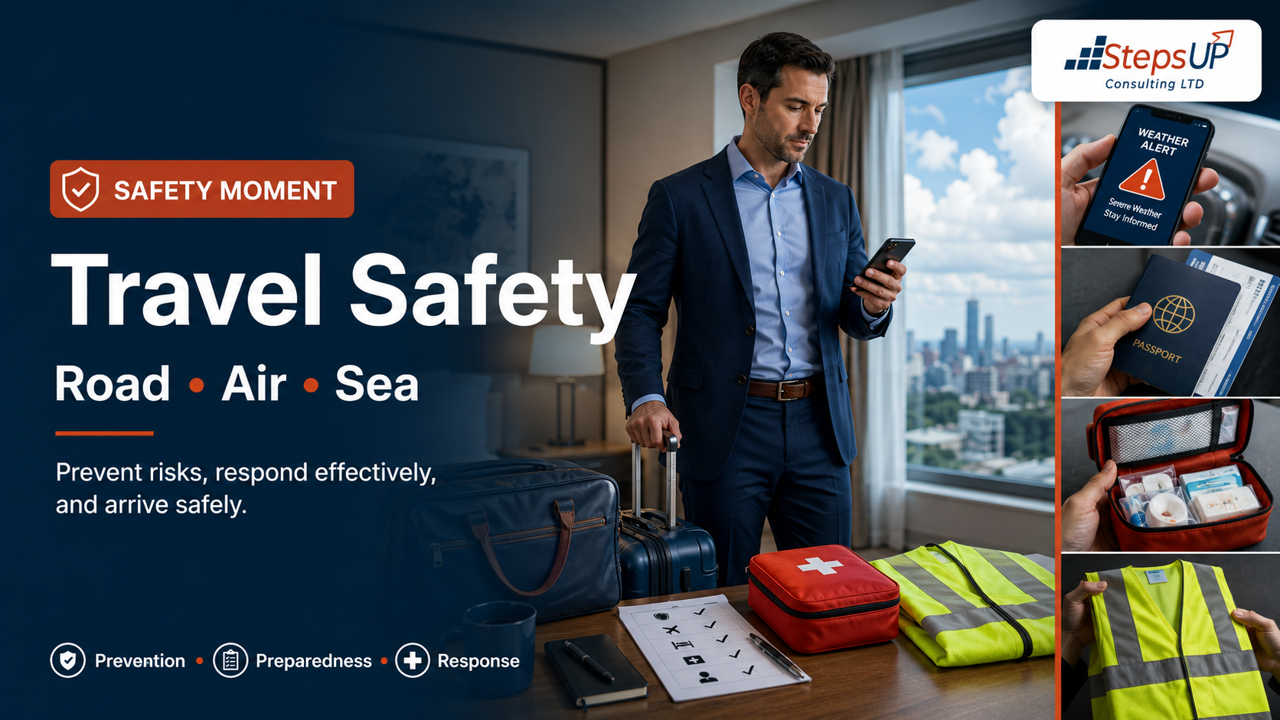
Travelling: Travel Safety by Road, Air and Sea
Travel is an important part of many work activities, whether employees are driving between locations, flying to another city or country, or travelling by boat or ship. Every type of transportation introduces different hazards, and conditions can change quickly during a journey.
Travel safety begins long before departure. Proper planning, awareness, communication and preparation can help prevent incidents, reduce unnecessary exposure to risk and ensure employees arrive safely at their destination.
The goal of Travelling is simple: Travel Safe. Arrive Well.
Why Travel Safety Requires Attention
Travelling may feel routine, but every journey involves changing conditions that can affect safety.
Road travel may involve traffic, poor weather, fatigue, vehicle breakdowns, unfamiliar routes and distracted drivers. Air travel can involve delays, turbulence, security procedures, medical situations and emergency evacuations. Marine travel introduces additional hazards such as wet decks, vessel movement, changing sea conditions and the need for emergency equipment such as life jackets.
Employees should also consider factors such as fatigue, unfamiliar surroundings, communication limitations, weather changes and unexpected delays.
Recognizing these risks before travelling allows employees to prepare appropriately instead of reacting only after something has gone wrong.
Before You Travel: Be Prepared
Safe travel starts with good preparation.
Employees should review their itinerary, transportation arrangements, weather conditions and any travel advisories before leaving. Important documents, emergency contacts and required safety equipment should also be checked in advance.
Before travelling:
- Plan the route, schedule and transportation arrangements.
- Check weather forecasts and travel advisories.
- Inspect vehicles or required equipment before departure.
- Confirm passports, identification, tickets and other travel documents.
- Carry necessary medications and a basic first-aid kit when appropriate.
- Keep a phone charger or power bank available.
- Share your itinerary and important contact information when required.
- Get adequate rest before beginning the journey.
- Know the emergency procedures related to your method of transportation.
A few minutes of preparation can prevent significant problems later in the journey.
Staying Safe on the Road
Driving remains one of the most common forms of work-related travel and requires constant attention.
Drivers should always wear their seatbelt, respect speed limits, maintain a safe following distance and adapt their driving to road and weather conditions.
Mobile phones and other distractions should not be used while driving. If communication is necessary, the vehicle should first be stopped in a safe location.
Fatigue must also be taken seriously. Long journeys, poor sleep and extended periods behind the wheel can reduce reaction time and decision-making ability.
During road travel:
- Wear your seatbelt at all times.
- Follow speed limits and traffic signs.
- Maintain a safe distance from other vehicles.
- Avoid using your phone while driving.
- Monitor weather and road conditions.
- Take regular breaks during long journeys.
- Never drive while impaired by alcohol, drugs or severe fatigue.
If the vehicle develops a problem, pull over to a safe location when possible, activate the hazard lights and request assistance.
Staying Safe During Air Travel
Air travel has established safety procedures that passengers should follow throughout the journey.
Pay attention to cabin crew instructions, safety demonstrations and announcements. Keep your seatbelt fastened whenever you are seated, even when the seatbelt sign is turned off, as unexpected turbulence can occur.
Passengers should also know the location of the nearest emergency exit and avoid blocking aisles or exits with luggage.
During air travel:
- Follow all cabin crew instructions.
- Keep your seatbelt fastened when seated.
- Know the location of the nearest emergency exit.
- Store luggage securely in the designated areas.
- Keep aisles and exits clear.
- Report suspicious activity, unsafe conditions or medical concerns.
- Remain calm and follow crew instructions during an emergency.
In an evacuation, personal belongings should be left behind if instructed. Safety and evacuation speed are more important than luggage.
Staying Safe at Sea
Travelling by boat or ship requires additional awareness because vessel movement, weather and wet surfaces can quickly create hazardous conditions.
Passengers and workers should understand where life jackets, emergency exits and muster stations are located. Instructions from the captain and crew should always be followed.
While travelling by sea:
- Wear a life jacket whenever required or instructed.
- Know the location of your muster station.
- Follow crew instructions and participate in safety drills.
- Use handrails when moving around the vessel.
- Walk carefully on wet or moving decks.
- Do not lean over railings or enter restricted areas.
- Stay aware of weather and sea conditions.
- Keep walkways and emergency access points clear.
Marine conditions can change rapidly, so instructions from the vessel crew should never be ignored.
What Not to Do While Travelling
Some incidents occur because normal safety precautions are ignored in an attempt to save time or make the journey more convenient.
Employees should never allow schedules or deadlines to take priority over safety.
Avoid:
- Driving while tired, distracted or impaired.
- Ignoring weather warnings or official travel advisories.
- Using a phone while driving or moving through hazardous areas.
- Ignoring instructions from drivers, cabin crew or vessel personnel.
- Blocking emergency exits or access routes.
- Overloading vehicles, boats or transportation equipment.
- Taking unnecessary risks to save time.
- Remaining silent when an unsafe condition is identified.
Unsafe shortcuts increase risk. A poor decision can affect everyone travelling with you.
If Something Goes Wrong
Even with good preparation, unexpected situations can occur.
The first priority is to stay calm, evaluate the situation and avoid creating additional danger.
If an incident occurs:
- Assess the situation. Identify the hazard and determine whether anyone is injured or at immediate risk.
- Move to safety. Relocate to a safe area if it can be done without creating additional risk.
- Alert the appropriate person. Contact the driver, crew, supervisor, company representative or emergency services as required.
- Provide clear information. Explain your location, the nature of the incident and whether anyone requires assistance.
- Follow instructions. Follow directions from emergency responders, transportation personnel or local authorities.
- Assist others only when safe. Do not put yourself at additional risk while attempting to help.
During an emergency, quick action is important, but safe and controlled action is even more important.
Report Incidents and Unsafe Conditions
Travel safety does not end when the immediate situation has been controlled.
Incidents, near misses, damaged equipment and unsafe conditions should be reported through the appropriate company process as soon as possible.
Employees should provide clear and accurate information about what happened, where it occurred and who was involved. Photos or additional documentation may be collected when it is safe and appropriate to do so.
Reporting allows the organization to identify hazards, investigate contributing factors and implement corrective actions.
Report it today so the same situation can be prevented tomorrow.
StepsUP Travelling Safety Moment
For a concise overview of the recommended actions before, during and after travel by road, air or sea, review the complete StepsUP Travelling Safety Moment:
StepsUP Safety Moment – Travelling: Travel Safe. Arrive Well.
View the complete travel safety presentation covering preparation, prevention, safe actions during road, air and sea travel, emergency response and incident reporting.
This Safety Moment can be used during toolbox talks, pre-travel briefings, team meetings or employee orientation to reinforce safe travel practices and emergency preparedness.
Travel Safe. Arrive Well.
Every journey is different, but the basic principles of travel safety remain the same.
Plan ahead, stay alert, follow established procedures, communicate concerns early and know how to respond if conditions change.
Whether travelling by road, air or sea, employees should never take unnecessary risks simply to meet a schedule or save time.
Preparation prevents incidents. Awareness supports better decisions. Timely reporting helps prevent recurrence.
Safe travels. Every trip. Every time. Everywhere.