Heavy Rain and Thunderstorm Safety in the Workplace
Severe weather can develop quickly and create unexpected hazards in the workplace. Heavy rain, thunderstorms, strong winds, lightning and localized flooding can affect visibility, access routes, equipment, electrical systems and the ability of employees to perform their work safely.
For organizations with employees working outdoors, travelling between locations, operating equipment or working around exposed infrastructure, preparing before severe weather arrives is essential. A few minutes of preparation can prevent injuries, equipment damage and unnecessary exposure to hazardous conditions.
Why Severe Weather Requires Attention
Heavy rain does more than make employees uncomfortable. It can significantly change normal working conditions.
Wet floors, stairs, platforms and access routes increase the risk of slips and falls. Heavy rainfall can also reduce visibility for drivers and equipment operators, while standing water may hide holes, debris or electrical hazards.
Strong winds introduce additional risks by moving unsecured materials, tarps, signs and equipment. During thunderstorms, lightning can create an immediate danger to anyone working outdoors, at heights, near exposed metal structures or in open areas.
Because weather conditions can change rapidly, employees and supervisors should not wait until conditions become obviously dangerous before taking action.
Preparation Before the Storm
The safest response begins before heavy rain or thunderstorms reach the worksite.
Teams should monitor weather forecasts and alerts throughout the day, particularly when severe conditions are expected. Communication procedures should also be clear so employees know who will issue a stop-work instruction and where they should go if conditions deteriorate.
Before the storm, employees and supervisors should:
- Inspect and clear drains, ditches and pedestrian routes.
- Secure loose materials, tools, tarps and signage.
- Protect electrical connections and sensitive equipment.
- Confirm shelters, meeting points and evacuation routes.
- Identify areas that may become flooded or difficult to access.
- Ensure emergency communication channels are available.
Preparation should be completed while conditions are still safe. Waiting for the first lightning strike or significant flooding may already be too late.
When Should Work Stop?
Employees should understand that stopping work is a safety control, not a failure to complete the task.
Operations should be stopped or reassessed when there is nearby lightning or thunder, strong winds capable of moving materials, accumulated water affecting access routes, poor visibility or instructions from supervisors, HSE personnel or local authorities.
Activities involving working at heights, lifting operations, exposed electrical equipment, open areas and vehicle movement may require additional precautions or earlier suspension.
During severe weather, employees should move to an approved shelter and avoid trees, exposed metal structures, downed power lines and flooded areas near electrical sources.
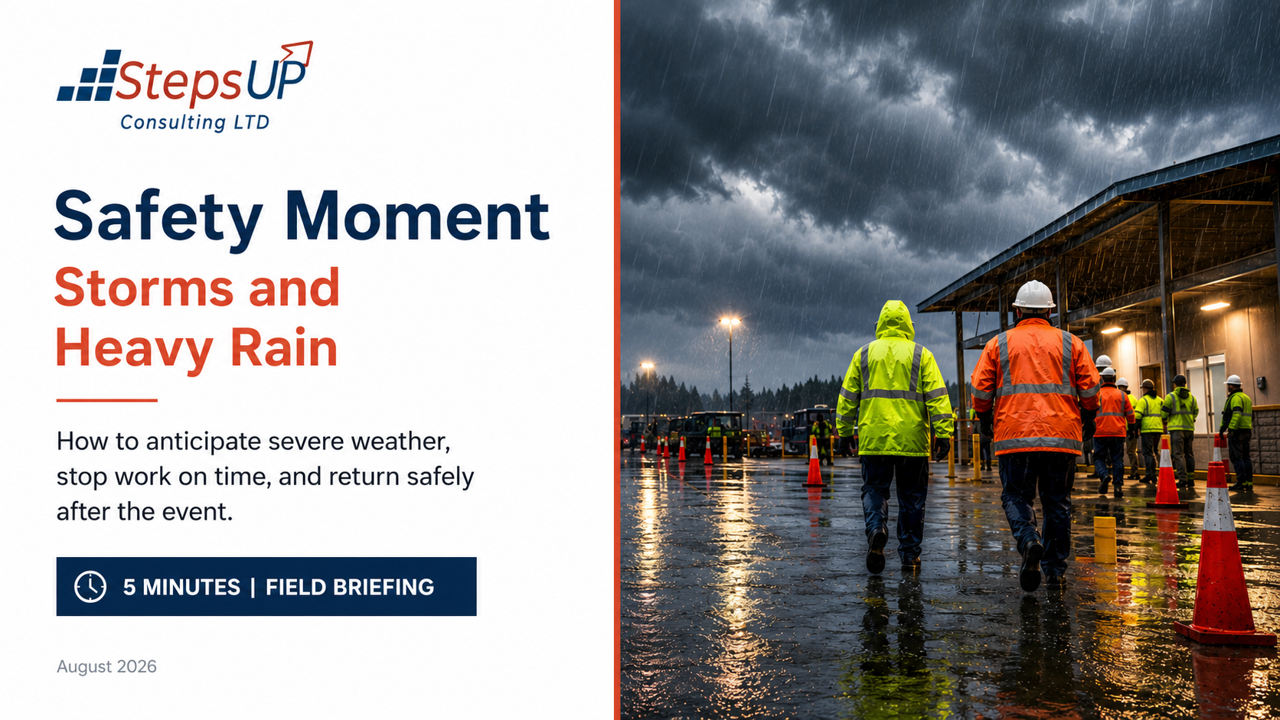
StepsUP Heavy Rain & Thunderstorm Safety
For a concise overview of the recommended actions before, during and after severe weather, review the complete StepsUP Safety Moment:
StepsUP Safety Moment – Heavy Rain & Thunderstorm Safety
View the complete safety presentation with recommendations for preparation,
response during severe weather, and safe return to the work area.
This Safety Moment can be used during toolbox talks, team meetings or field briefings to reinforce severe-weather awareness and safe decision-making.
Returning to Work Safely
The end of the rain does not necessarily mean the end of the hazard.
Before operations resume, the affected work area should be inspected. Employees should look for fallen branches, damaged structures, blocked drains, standing water, unstable surfaces, downed cables and other conditions created by the storm.
Electrical equipment should not be energized until it has been confirmed to be dry, safe and authorized for use.
Water, mud and debris should also be removed from access routes before normal activities continue. If damage or an unsafe condition is identified, employees should report it rather than attempting an improvised repair.
Work should resume only after the area has been inspected and the appropriate authorization has been given.
Safety Starts With Early Decisions
Severe weather cannot always be prevented, but exposure to its hazards can be controlled.
Monitoring conditions, preparing the workplace, communicating clearly, stopping work when necessary and conducting a proper inspection before returning can significantly reduce the likelihood of an incident.
A storm can develop quickly. Our response must be faster.